Crime and Punishment

[Jamuary 2006]

**********
Crime and Punishment
Fyodor Dostoevsky

number of voters: 7
percentage of voters who finished the book: 43
highest rating: 9
lowest rating: 3
average overall rating: 6.9
average rating of finishers: 8.2
number of readers who thought this book was a crime: a peck
number of readers who thought this book was a punishment:  a bushel


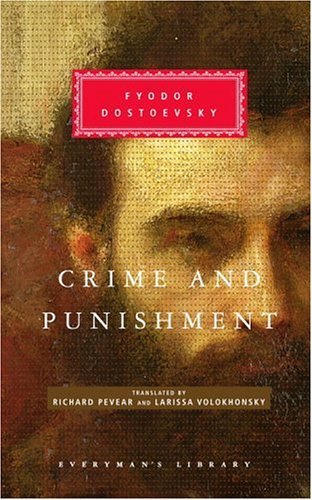
“Allow me tell you about the conversation I had earlier this week with a group of highly intellectual women. They were discussing a novel by Dostoevsky… you may have heard of him. He’s that Russian writer who spent 10 years in exile in Siberian labor camps as a political prisoner. The women with whom I spoke were discussing Dostoevsky’s book Crime and Punishment, which he’d written upon his return to Russia in 1860. From what I could tell, the women rated his book very highly. Many had struggled with the book’s length and some had failed to finish it at all (albeit not without trying or vowing to finish it at a later date). Still others had failed to even start the book. These looked on the others with a sense of awe and guilt… and perhaps a little relief. As far as the story was concerned, many found it excruciating… in good and bad ways. It is excruciatingly suspenseful, but it is also excruciatingly long. As far as high brow literature is concerned, most of the women rate it among the highest. As far as entertainment value, very few would recommend it on enjoyment alone. The main character was discussed loathingly, although most admitted they sympathized with and even rooted for him. In the end, it was an evening well spent. I may even request of them that I be allowed to eavesdrop on their next discussion… It is some modern piece of fiction (Bee Season) by one of these liberal authors (Myla Goldberg) so well-published these days…
“But I’m sorry, I haven’t even let you get in a word this whole time…”

My Sister’s Keeper

[December 2005]

**********
My Sister’s Keeper
Jodi Picoult

Number of voters: 13
percentage of voters who finished the book: 100
highest rating: 10 (For those of you wondering where this 10 came from, our Seaside correspondent, Jenn, emailed it in.)
lowest rating: 6.5
average rating: 8.49
quickest read: 30 hours
longest read: 3 weeks
average length of time it took us to read: 6.5 days
fun fact: This is now our collective favorite book, barely surpassing To Kill a Mockingbird by Harper Lee.

We loved nearly everything about My Sister’s Keeper. We enjoyed the author’s style. We liked that the book was told from each person’s perspective. We loved the way the author described things. We liked the story and the subject matter. We thought the flashbacks were groovy. We laughed. We cried. We loved this book!

So maybe we didn’t like the mom, but we liked that we weren’t necessarily supposed to like the mom. And maybe some of us didn’t love that there was a different font for each person, but, really, that was pretty clever—and key to understanding the prologue and the epilogue. Oh, and some of us thought there were some corny places, but hey, who’s gonna quibble over little details. We loved this book!

Sisters, mothers, brothers, fathers, daughters, sons, doctors, nurses, lawyers, judges, and service dogs the world over will find someone or something to relate to in My Sister’s Keeper. (Did I mention that we loved this book?)

Bel Canto

[November 2005]

**********
Bel Canto
Ann Patchett

number of voters: 11
percentage of voters who finished the book: 100%
percentage of voters who finished the book without skipping the middle: 91
highest rating: 7
lowest rating: 3
average rating: 5.68

best comment: “somehow all 50 used the bathrooms every day and we didn’t even have to hear about it once—that was lovely.” —Rachael, via email


As a group, I think we WANTED to like Bel Canto. And I think we ALMOST did. HOWEVER, we couldn’t talk about this book without disclaimers, and that isn’t generally a good sign.

Disclaimer #1: It’s interesting and YET … nothing really happens. The pace is slow. There is a lot of detail about a whole lot of nothing. In fact, one could skip the middle of the book and not miss a beat in the plot.

Disclaimer #2: The story involves a lot of beautiful singing BUT … the story involves a lot of beautiful singing. If you are not interested in opera singing it might not hold your interest. And even if you are opera’s greatest fan in the whole wide world, the detail with which the singing is described can be a bit much.

Disclaimer #3: It would have been a lot better IF… it ended before the epilogue. We were nearly unanimous in our opinion that the epilogue was abrupt and out of place. We weren’t prepared for it as readers, and we weren’t convinced that the characters were prepared for it either.

So with all these disclaimers, did we actually like Bel Canto? Well, yes… and no. To summarize, the description which nearly every reader gave this book: “interesting.”

Blindness

[October 2005]

**********
Blindness
Jose Saramago

number of voters: 9
percentage of voters who finished the book: 88
highest rating: 8
lowest rating: 4
average rating: 6.25

The woman who chose the book spoke first. She liked the book, the way it ended, the way it made her think about what it would like to be blind, even though she was already blind. Then the teacher who was eating dinner said she was not really impressed with the book, that she felt like she was reading a translation, which she was. The woman with shoulder-length blonde hair said that it took her a while to get herself into the book, that some parts were random, but that she was glad that she had read it. The first pregnant woman to speak never would have picked up this book, let alone read it, were it not for the book group. She said, I like that there were no quotation marks. The just newly pregnant woman was kind of glad she’d read it, that she liked it for the first half, but that it then went on and on (kind of like this recap). The woman with the broken leg liked the book at the beginning, but wasn’t really excited about it and was even less excited about it when it became more gruesome and brutal, at which point she began to skim the details. The woman who was taking notes, that is, the third pregnant woman and the only woman who had not yet gone blind, took very good notes for the red-haired woman, who was thoroughly impressed by the this author’s writing ability and the fascinating story, but nonetheless could not necessarily recommend the book due to its rather disturbing imagery (if you’ll pardon the irony of words implying the ability to see). The pregnant woman who was nearly full-term definitely did not enjoy the book, nor did she bother finishing it since she didn’t like the writing style which she said was, quote, distracting, endquote. The woman with curly hair read every page but whole-heartedly agreed regarding the distracting writing style, that the book was hard to follow. But it left her, as well as all the other blind readers, wondering, What is the deeper meaning? What is the author trying to say? Each person must answer that for herself. As to why we were blind that night, the red-haired woman said, I don’t think we ever were blind, I think we were wearing blindfolds.

The Devil Wears Prada

[September 2005]


**********
The Devil Wears Prada
Lauren Weisberger

number of voters: 10
percentage of voters who finished the book: 100
highest rating: 6.5
lowest rating: 2
average rating: 4.675

Do you want to read a moderately cheesy book with mediocre writing about two somewhat annoying main characters and a completely shallow storyline? Then The Devil Wears Prada is the book for you! This story about a mean (some might say evil) boss in the world of high fashion and her everyday-more-like-her personal assistant provides dozens (some might say hundreds) of examples of how mean and shallow people can be to get what they want. Though it might fall under the general heading of “chick lit,” have no fear! It is not a shining example of this oft-looked-down-upon genre. The Devil Wears Prada proves that a moderately interesting story idea combined with industry insider information does not necessarily a good book make (nor a good author). Read this book and you might possibly be entertained. Read this book and you will definitely be inspired to: love your job less and your family more; recognize how good you’ve got it (even though you don’t write for the Holy Grail of magazines: The New Yorker); and be proud of your I-got-this-entire-ensemble-at-Target-for-only-$24.99 outfit.

Angry Housewives Eating Bon Bons

[April 2005]

***********
Angry Housewives Eating Bon Bons
Lorna Landvik

number of voters: 7
percentage of voters who finished the book: 100
highest rating: 9.25
lowest rating: 6.5
average rating: 7.92

For those of you who could not make it to our meeting, allow me to give you a brief description of our appetizers (provided by Jenna):
Bon bons (of course)
Bananas with pineapple garnish
Sunflower seeds

For those of you who do not understand the relevance of the snack items, read the book! We all recommend it.

Angry Housewives is both fun summer reading and controversial discussion topic. It is an easy, quick read, but it is also deep and intense in the issues it tackles.

Author Lorna Landvik (whose book jacket photo looks c.1988) tells the story of five women—neighbors who become friends, bound together by a lifetime of books. As readers, we were quickly invested in each of these women. We see their lives unfold through the lens of historic and controversial events (such as: war, abuse, homosexuality, and inter-racial adoption), but more importantly through the lens of their book group choices.

Our complaints were few. Some of us found the chapter organization at the beginning moderately confusing. Some found the author’s “agenda” led to obvious plot directions. Some wanted the women’s bookclub to remain such: a women’s book club. But these complaints were few compared to the enjoyment we shared in reading and discussing this book. Oh, and the meeting lasted nearly 2-1/2 hours!

To make a long story short, read this book!

In Her Shoes

[March 2005]

**********
In Her Shoes
Jennifer Weiner

number of voters: 5
percentage of voters who finished the book: 100
highest rating: 6.8
lowest rating: 5
average rating: 6.16

It seems that the strongest compliment we can give this book is, “Well, I didn’t NOT like it.” It was an easy read, definite summer (or late spring) fare. But there were, to put it mildly, some annoying characters. We found it difficult to relate to many of the people.

The conflict was a tad repetitive (“We get it already.”), while the resolution was too quick (“What? They’re suddenly best friends forever?”).

But we didn’t NOT like it. We just didn’t LOVE it.

percentage of voters who also read Jennifer Weiner’s first novel, Good in Bed, and strongly recommend it over this one: 100

Our Lady of the Forest

[February 2005]

**********
Our Lady of the Forest
David Guterson

number of voters: 4
number of voters who finished the book: 2
highest rating: 8
lowest rating: 1
average rating: 3.8

If you read Our Lady of the Forest by David Guterson, chances are you either loved it or hated it.

Those in favor: Enjoyed the overall tone of the book, including its setting in the Northwest forest. Appreciated the apparent redemption of some characters. Thought it was a complex story about faith. Yay!

Those opposed: Couldn’t invest in the characters—who were painted only in terms of their worst faults, mistakes, and traumatic experiences—and thus not complex. Didn’t enjoy the utter depravity. Thought the storyline was mostly pointless. Nay!

Empire Falls

[January 2005]

**********
Empire Falls
Richard Russo

Number of voters: 4
Highest rating: 8
Lowest rating: 4
Average rating: 6.25

We didn’t have a lot to discuss because, well, not a lot happens in the book. It is mostly a character study, and, for the most part, this is what we enjoyed about it. The characters are well-developed. The story is interesting and entertaining.

Detractors wondered what the criteria is for a Pulitzer prize and why Russo received one for this book. The ending seemed like an unoriginal cop-out.

But overall, Empire Falls is a page-turner...quite the accomplishment for its sometimes slow pace.

The Bronze Bow

[December 2004]

**********
The Bronze Bow
Elizabeth George Speare

Highest rating: 9
Lowest rating: 4
Average rating: 6.92 (6 votes)

Book cover rating: ugly

This book was generally well-liked, especially as historical fiction and young adult literature. It provided an interesting perspective of Jesus through cultural, societal perspectives without specifically being “Christian lit.” The author’s portrait of Jesus seemed to us mostly accurate and certainly not offensive, as some secular takes on Jesus might be.

We almost unanimously agreed that the book ended too quickly. The author spent a lot of care and time building to a conclusion that was abrupt. We would have appreciated her taking more time (and words) to flesh out her ideas.

But for the most part, we would recommend this book, for both adolescents and adults, as good historical fiction involving Jesus and life under Roman rule during the time of Christ.

Vanity Fair

[November 2004]

**********
Vanity Fair
William Makepeace Thackeray


The only book in the history of book group that not even one of us could finish. I guess you could say none of us could make peace with it. So we got together and watched the movie instead.

The Notebook

[October 2004]

**********
The Notebook
Nicholas Sparks

Highest rating: 7.5
Lowest rating: 3
Average rating: 5

Our average rating speaks volumes about our general opinion of this book. Some enjoyed it, others didn’t, but few if any of us had really strong feelings about it either way.

Some thought it was tranquil and sweet, others found it boring, but most of us really thought it was neither here nor there, not really memorable, and unimpressive.

While some like the descriptions (of the relationship, of the house remodeling, of the alzheimers aspect...), several of us didn’t like the ending (a somewhat important part in a book), and most of us weren’t sure we’d recommend it (or read it again).

So, was it a hit? was it a miss? This group might say its both.

The Red Tent

[September 2004]

***********
The Red Tent
Anita Diamant

Highest rating: 8
Lowest rating: 2
Average rating: 6

In our discussion, we discovered firsthand that this is a controversial book. We found it an easy and interesting read. However, we thought the biblical missteps were distracting at best and bordering on blasphemous at worst.

Taken as a work of fiction, it was well-regarded. Taken as a historical account, it was much-doubted. However, we all enjoyed the “human faces” given to the biblical characters.

Some questions that we pondered:
•Would we have enjoyed it more without any scriptural knowledge?
•Could it have been as good a novel had the author stuck closer to scripture?
•Did the author know she was “taking liberties,” or does she believe her portrayals of people & places are accurate?

Their Eyes Were Watching God

[July 2004]

**********
Their Eyes Were Watching GodZora Neale Hurston

Highest: 8
Lowest: 5
Average: 6.8

We discussed how Hurston’s writing style, with its detail and dialects, could completely immerse you in the culture or utterly bog you down with reading about it.

For some, this was the first book we had read that occurs completely within black culture (as opposed to books about racial tensions between blacks and whites).

The evolution of the title character was a source of inspiration, as she changed from a dependent to independent woman.

In general, this book was well-liked except for the difficulty which some of us had in reading it.

The Distant Land of My Father

[June 2004]

*********

The Distant Land of My Father
Bo Caldwell


Highest: 8.5
Lowest: 6
Average: 7.5

We discussed the varying aspects location offered in this book. For some, it was easy to immerse in the California sections, yet difficult to picture the China sections.

Anna as a young girl seemed unrealistically portrayed to some, although influence of memory on the narrator could account for this.

This was a moving book about pain, forgiveness, and regret that most of us would recommend.

Watership Down

[May 2004]

***********

Watership Down
Richard Adams


Highest rating: 9
Lowest rating: 5
Average: 7.45

We discussed the difficulty of assimilating to the characters--”are these talking rabbits?”--but also the genius behind using rabbits as metaphor.

We discussed the grandeur the novel attempts (an epic) and the lengths to which it succeeds (great).

We discussed the various characters and settings and plot devices, their strengths and weaknesses, and the desire to see the movie rendition of this fascinating piece of literature.

In the Presence of My Enemies

[April 2004]

**************

In the Presence of My Enemies
Gracia Burnham

Highest rating: 9
Lowest rating: 5
Average rating: 7.5

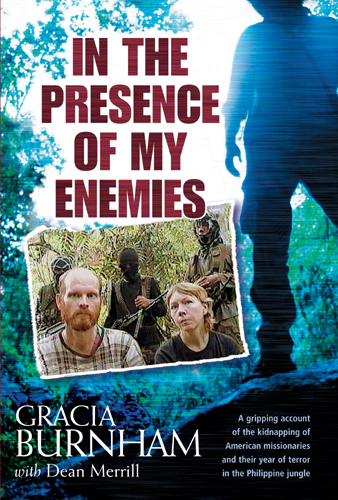
We discussed how this book put a face on both terrorism and Christianity. It is being read by non-Christians and Christians alike and is thus a great witness.

We also appreciated how the author was descriptive in their plight and yet used discretion with her words. She didn’t try to disturb the reader as much as she wanted to present the truth of the situation.

Gulliver's Travels

[March 2004]


**********

Gulliver's Travels
Jonathan Swift

Highest rating: 7
Lowest rating: 2.5
Average rating: 5.2

And just for fun...

Those who read the entire book:
Average rating: 6.67

Those who read only portions:
Average rating: 4.125

I’ll leave it to you to determine whether those who gave it a low rating did so because they did not finish the book or whether they did not finish the book because they didn’t like it to begin with.

We discussed--some might say “disgust”--the social significance of the novel in its own time, though for most of us (myself included) it went over our heads.

We also discussed some of the crass descriptions and the surprise that this is sometimes made into a children’s story.

Safely Home

[February 2004]


**********

Safely Home
Randy Alcorn

Highest rating: 8.5
Lowest rating: 5
Average rating: 6.83

The book was met with mixed reviews. It seems that everyone liked parts and everyone disliked parts, but which parts were which varied somewhat. (“Parts is parts,” right? Heh heh) The descriptions of heaven were the weakest parts of the book for most, but whether this is the fault of the author or the topic itself is hard to say. The religious, political, and social aspects of China were the most interesting, yet perhaps not detailed enough for some. We also discussed the idea of “Christian books” and their quality vs. message.

The Persian Pickle Club

[January 2004]


The Persian Pickle Club, by Sandra Dallas

Highest rating: 8
Lowest rating: 6
Average rating: 7.0625

Everyone generally enjoyed this book, although there was some discrepancy as to whether or not we thought it was a “good” book.

Some thought the characters could have been written better or more thoroughly. Others thought the plot stood well enough on its own and that any more character development would have ruined the pace.

Some thought that the book was entertaining, but was little more than that. Others said that the book should not be judged as a classic but for what it is: quality modern ficiton.

There was some comparison made to The Secret Life of Bees (which many books in our group seem to get compared against; maybe because it was our first book). Someone made the comment that, once again, we have an ambiguous ending.