[October 2009]
**********
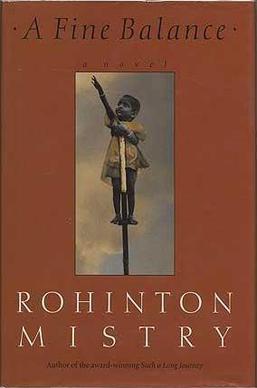
A Fine Balance
Rohinton Mistry
number of voters: 7
percentage of voters who finished the book: 100
highest rating: 9
lowest rating: 6.5
average rating: 7.7
percentage of readers who were disappointed in some way or another with the ending: 100
NOTE: All quotes in this recap are from the book.
*****
“Birth and death—what could be more monstrous than that? We like to deceive ourselves and call it wondrous and beautiful and majestic, but it’s freakish, let’s face it.”
Part history. Part fiction. All epic.
Set in India during “The Emergency,” A Fine Balance follows four characters on a roller coaster existence of day-to-day survival. It is dark and funny and moving and maddening. “After all, our lives are but a sequence of accidents—a clanking chain of chance events. A string of choices, casual or deliberate, which add up to that one big calamity we call life.”
Rohinton Mistry pieces together a quilt of characters (both major and minor) and events (both national and miniscule) that is both beautifully rich and tragically threadbare. The end result is that “the whole quilt is much more important than any single square.”
The main characters are intriguing, if not always likable, each one struggling to survive. “You have to maintain a fine balance between hope and despair. In the end it’s all a question of balance.” Although it could be argued that in the end the author makes his opinion known as to which wins out.
A Fine Balance is not for everyone. It is long, slow in places, at times frustrating, and often infuriating. But for the patient reader, this epic tale of a country gone mad is a truly rewarding experience. “Flirting with madness was one thing; when madness started flirting back, it was time to call the whole thing off.”
Love in the Time of Cholera
[August 2009]
**********
Love in the Time of Cholera
Gabriel Garcia Marquez
number of voters: 2
percentage of voters who finished the book: 100
highest rating: 5
lowest rating: 5
average rating: 5
question of the night: Can really good writing redeem a really long story with really unlikable characters?
**********
She pulls the faded book from the shelf, dusting its cover with the palm of her frail hand. The pages are worn and yellowed, corners threading from years of folding and unfolding where the reader had marked his place. As she opens the cover, a musty smell fills her nostrils, and she breathes deep its familiar scent.
This is the book. This is the book that her lover read and reread from the time she first knew him until the day it fell from his hands in his final repose.
She’d never dared to open it since that day. How it came to be on this shelf, she would never learn, but there it was, and without pausing to contemplate the repercussions of the ensuing memories, she had removed it from its own repose.
It is just a book, she tells herself. Just a story. There is nothing to fear from a story, a jumble of words arranged in a particular order. But her hands tremble nonetheless. And her fingers fumble with the frontispiece as she turns to chapter one.
...
As if from a dream she awakens to the final sentence, five words loaded with a subtext that sends her heart plummeting. This is the book. This is the book that her lover, to whom she had abandoned herself and her purity for innumerable years, had so desperately adored. Her stomach roiled.
Who was this man who had loved a book with such unlikable—nay, appalling—characters and such a tedious plot. Had he seen himself in this same light? Had he thought of her in this way?
The writing was beautiful; perhaps he merely enjoyed the language the author employed. Perhaps he felt a particular sympathy for these drifting souls. Or maybe, through some literary trick of the mind, he was drawn to the disease of the title, somehow knowing that he too would die by its clawed grasp.
This was the book he had loved as much as, if not more than, he had loved her. A better woman might return it to its resting place on the shelf for others to find, read, ponder.
She throws it in the fire and watches it burn.
**********
Love in the Time of Cholera
Gabriel Garcia Marquez
number of voters: 2
percentage of voters who finished the book: 100
highest rating: 5
lowest rating: 5
average rating: 5
question of the night: Can really good writing redeem a really long story with really unlikable characters?
**********
She pulls the faded book from the shelf, dusting its cover with the palm of her frail hand. The pages are worn and yellowed, corners threading from years of folding and unfolding where the reader had marked his place. As she opens the cover, a musty smell fills her nostrils, and she breathes deep its familiar scent.
This is the book. This is the book that her lover read and reread from the time she first knew him until the day it fell from his hands in his final repose.
She’d never dared to open it since that day. How it came to be on this shelf, she would never learn, but there it was, and without pausing to contemplate the repercussions of the ensuing memories, she had removed it from its own repose.
It is just a book, she tells herself. Just a story. There is nothing to fear from a story, a jumble of words arranged in a particular order. But her hands tremble nonetheless. And her fingers fumble with the frontispiece as she turns to chapter one.
...
As if from a dream she awakens to the final sentence, five words loaded with a subtext that sends her heart plummeting. This is the book. This is the book that her lover, to whom she had abandoned herself and her purity for innumerable years, had so desperately adored. Her stomach roiled.
Who was this man who had loved a book with such unlikable—nay, appalling—characters and such a tedious plot. Had he seen himself in this same light? Had he thought of her in this way?
The writing was beautiful; perhaps he merely enjoyed the language the author employed. Perhaps he felt a particular sympathy for these drifting souls. Or maybe, through some literary trick of the mind, he was drawn to the disease of the title, somehow knowing that he too would die by its clawed grasp.
This was the book he had loved as much as, if not more than, he had loved her. A better woman might return it to its resting place on the shelf for others to find, read, ponder.
She throws it in the fire and watches it burn.
The No. 1 Ladies Detective Agency
[July 2009]
**********
The No. 1 Ladies Detective Agency
Alexander McCall Smith
number of voters: 7
percentage of voters who finished the book: 100
highest rating: 9
lowest rating: 4
average rating: 6.41
random quotes about this book: “didn’t love it” “didn’t get it” “liked it fine” “really liked it” “take it or leave it” “liked it” “love it”
**********
“Mma Ramotswe had a detective agency in Africa...” and First Monday Reading Group might need her to solve the mystery of what to think of her novel.
We’ve never read another book quite like The No. 1 Ladies’ Detective Agency—and depending on your perspective that might be a good thing or a bad thing. Is it overly simple, or simply unpretentious? Is it choppy and uneven, or consistently varied? Are the African themes beautiful and moving, or too picturesque?
Precious Ramotswe is the first woman in Botswana to open a detective agency (hence, the title). As a main character, Precious is strong, independent, and clever. She solves cases with alacrity, and each case reveals to the reader some new, hidden facet of her character. In this way, the novel is surprisingly deep.
The cases, however, are fairly uncomplicated, and as readers we don’t get far before the author takes us somewhere else. The quick, short mysteries can be entertaining but can also lack depth. Also, the story jumps around so much that it can be hard as a reader to get a good footing as to where the plot is going.
The setting is undoubtedly a rarely seen portrait of Africa. Whether it focuses too much on the continent’s beauty and not enough on its hardships is debatable, but never for a moment does the story feel like is could take place anywhere but the sub-Sahara.
So, is The No. 1 Ladies’ Detective Agency recommended reading? The case file is open. A ruling is pending. You just might have to read it to decide the answer for yourself.
**********
The No. 1 Ladies Detective Agency
Alexander McCall Smith
number of voters: 7
percentage of voters who finished the book: 100
highest rating: 9
lowest rating: 4
average rating: 6.41
random quotes about this book: “didn’t love it” “didn’t get it” “liked it fine” “really liked it” “take it or leave it” “liked it” “love it”
**********
“Mma Ramotswe had a detective agency in Africa...” and First Monday Reading Group might need her to solve the mystery of what to think of her novel.
We’ve never read another book quite like The No. 1 Ladies’ Detective Agency—and depending on your perspective that might be a good thing or a bad thing. Is it overly simple, or simply unpretentious? Is it choppy and uneven, or consistently varied? Are the African themes beautiful and moving, or too picturesque?
Precious Ramotswe is the first woman in Botswana to open a detective agency (hence, the title). As a main character, Precious is strong, independent, and clever. She solves cases with alacrity, and each case reveals to the reader some new, hidden facet of her character. In this way, the novel is surprisingly deep.
The cases, however, are fairly uncomplicated, and as readers we don’t get far before the author takes us somewhere else. The quick, short mysteries can be entertaining but can also lack depth. Also, the story jumps around so much that it can be hard as a reader to get a good footing as to where the plot is going.
The setting is undoubtedly a rarely seen portrait of Africa. Whether it focuses too much on the continent’s beauty and not enough on its hardships is debatable, but never for a moment does the story feel like is could take place anywhere but the sub-Sahara.
So, is The No. 1 Ladies’ Detective Agency recommended reading? The case file is open. A ruling is pending. You just might have to read it to decide the answer for yourself.
Moloka'i
[June 2009]
**********
Moloka’i
Alan Brennert
number of voters: 7
percentage of voters who finished the book: 100
highest rating: 9
lowest rating: 7.5
average rating: 8.03
percentage of readers who liked this book particularly because of the history: 100
**********
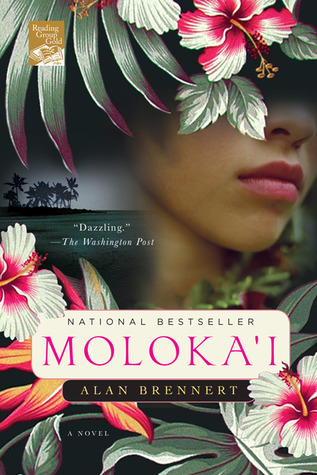
At the intersection of history, Hawaii, and leprosy lies the fascinating novel Moloka’i. In 1891, a young Hawaiian girl contracts leprosy. She is torn from her family and sent to live in the leper colony at Kalaupapa on the island of Moloka’i. How her life unfolds from this point is best left to author Alan Brennert’s competent prose.
The historical part of this historical fiction book was a completely new and fascinating topic for us. The irony of a beautiful island paradise serving as a prison is haunting; the humanity of the colony’s inhabitants is astounding. The fact that hundreds of people were ripped from their families is horrifying; the government’s desire to protect the rest of a population is frighteningly understandable.
As for the fiction, it is a shocking and tragic story, yet surprisingly sweet and moving. We couldn’t help but root for the young heroine, and her life story quickly became too interesting to put down.
The novel itself is not without its flaws—it is at times choppy and can be repetitive—but these flaws are minor compared to the rewarding experience of the book as a whole. Moloka’i is a well-crafted piece of historical fiction. Recommended.
**********
Moloka’i
Alan Brennert
number of voters: 7
percentage of voters who finished the book: 100
highest rating: 9
lowest rating: 7.5
average rating: 8.03
percentage of readers who liked this book particularly because of the history: 100
**********
At the intersection of history, Hawaii, and leprosy lies the fascinating novel Moloka’i. In 1891, a young Hawaiian girl contracts leprosy. She is torn from her family and sent to live in the leper colony at Kalaupapa on the island of Moloka’i. How her life unfolds from this point is best left to author Alan Brennert’s competent prose.
The historical part of this historical fiction book was a completely new and fascinating topic for us. The irony of a beautiful island paradise serving as a prison is haunting; the humanity of the colony’s inhabitants is astounding. The fact that hundreds of people were ripped from their families is horrifying; the government’s desire to protect the rest of a population is frighteningly understandable.
As for the fiction, it is a shocking and tragic story, yet surprisingly sweet and moving. We couldn’t help but root for the young heroine, and her life story quickly became too interesting to put down.
The novel itself is not without its flaws—it is at times choppy and can be repetitive—but these flaws are minor compared to the rewarding experience of the book as a whole. Moloka’i is a well-crafted piece of historical fiction. Recommended.
Suite Française
[May 2009]
Suite Française, Irène Némirovsky
number of voters: 3
percentage of voters who finished the book: 100
highest rating: 9
lowest rating: 7
average rating: 8.167
percentage of book clubbers who didn’t read the book (shame on us!): 75
***
[personal disclaimer: Since I have still failed to finish reading this book, my recap centers more on what fascinates me about it and why I still desire to finish it than on our discussion recap...]
It’s June, 1940. You are a French authoress of Jewish descent, and your country is being invaded by the Germans. What do you do?
You write, of course.
You write what you see, what you hear, what you feel. Only you make it a novel, because the wound is still too raw to expose it to the air. You write a true story about fictional characters in the midst of invasion, flight, and quick defeat. You write about the foreign occupation and the tenuous peace it brings. For two years, you write. The story is unfolding around you every day.
But you do not know how the story will end. This part of the story, you cannot foretell.
It’s July, 1942. Your Jewish heritage is discovered by the Germans. You are sent to Auschwitz. And you are sent to the gas chambers.
This is the true story of Irène Némirovsky. It is not the story told in Suite Française, but knowing the author’s story makes the book all the more poignant.
And what of that unfinished novel? Madame Némirovsky’s daughters keep their mother’s notebook and, assuming it is a memoir with too traumatic of details, do not open its pages for 50 years, at which time they discover two parts of an unfinished suite.
Suite Française is part historical fiction and part history. It is haunting for the story it is, but even more so for the story the author herself could not tell.
Suite Française, Irène Némirovsky number of voters: 3
percentage of voters who finished the book: 100
highest rating: 9
lowest rating: 7
average rating: 8.167
percentage of book clubbers who didn’t read the book (shame on us!): 75
***
[personal disclaimer: Since I have still failed to finish reading this book, my recap centers more on what fascinates me about it and why I still desire to finish it than on our discussion recap...]
It’s June, 1940. You are a French authoress of Jewish descent, and your country is being invaded by the Germans. What do you do?
You write, of course.
You write what you see, what you hear, what you feel. Only you make it a novel, because the wound is still too raw to expose it to the air. You write a true story about fictional characters in the midst of invasion, flight, and quick defeat. You write about the foreign occupation and the tenuous peace it brings. For two years, you write. The story is unfolding around you every day.
But you do not know how the story will end. This part of the story, you cannot foretell.
It’s July, 1942. Your Jewish heritage is discovered by the Germans. You are sent to Auschwitz. And you are sent to the gas chambers.
This is the true story of Irène Némirovsky. It is not the story told in Suite Française, but knowing the author’s story makes the book all the more poignant.
And what of that unfinished novel? Madame Némirovsky’s daughters keep their mother’s notebook and, assuming it is a memoir with too traumatic of details, do not open its pages for 50 years, at which time they discover two parts of an unfinished suite.
Suite Française is part historical fiction and part history. It is haunting for the story it is, but even more so for the story the author herself could not tell.
Lamb: The Gospel according to Biff
[March 2009]
Lamb: the Gospel according to Biff, Christ's childhood pal, Christopher Moore
number of voters: 6
percentage of voters who finished the book: 100
highest rating: 9
lowest rating: 6
average rating: 7.33
percentage of readers who laughed and/or cringed, possibly at the same time: 100
***
If thou dost wish to laugh, if thou dost long for thy thoughts to be provoked, if thou seekest a respite from the typical retelling of the gospel, might we recommend the irreverent Lamb: The Gospel According to Biff?
We might. It depends.
Christopher Moore (whose author photos show him in a ratty t-shirt and baseball cap) takes his readers on a gleeful tour of the life of Christ, as told by the imaginary—and imaginative—Biff.
It is hilarious. It is troubling. It is moving. It is raunchy (very much so). It is well-researched and well-written. It is too long, but it is a quick read. It is believable and yet completely unbelievable. It is arguably accurate in its adherence to scripture, but it is full of colorful writing between the lines. It is a story you probably know, but it is completely unique. It might even drive you to your knees (if only to pray for your mind to be cleansed... or for the author’s soul).
Still confused? Maybe this will help:
Art thou willing to suspend thy disbelief for 400-some pages and look at the life of Christ in a whole new way? This book might possibly be for you.
Give it a try and let us know what you think. Or don’t. Direct all complaints and/or compliments to Christopher Moore.
Lamb: the Gospel according to Biff, Christ's childhood pal, Christopher Moorenumber of voters: 6
percentage of voters who finished the book: 100
highest rating: 9
lowest rating: 6
average rating: 7.33
percentage of readers who laughed and/or cringed, possibly at the same time: 100
***
If thou dost wish to laugh, if thou dost long for thy thoughts to be provoked, if thou seekest a respite from the typical retelling of the gospel, might we recommend the irreverent Lamb: The Gospel According to Biff?
We might. It depends.
Christopher Moore (whose author photos show him in a ratty t-shirt and baseball cap) takes his readers on a gleeful tour of the life of Christ, as told by the imaginary—and imaginative—Biff.
It is hilarious. It is troubling. It is moving. It is raunchy (very much so). It is well-researched and well-written. It is too long, but it is a quick read. It is believable and yet completely unbelievable. It is arguably accurate in its adherence to scripture, but it is full of colorful writing between the lines. It is a story you probably know, but it is completely unique. It might even drive you to your knees (if only to pray for your mind to be cleansed... or for the author’s soul).
Still confused? Maybe this will help:
Art thou easily offended in matters of faith and religion? This book is probably not for you.
Art thou willing to suspend thy disbelief for 400-some pages and look at the life of Christ in a whole new way? This book might possibly be for you.
Give it a try and let us know what you think. Or don’t. Direct all complaints and/or compliments to Christopher Moore.
The Shack
[February 2009]
The Shack, William P. Young
number of voters: 6
percentage of voters who finished the book: 100
highest rating: 7.5
lowest rating: 5
average rating: 6
percentage of readers who think the book would have been more powerful if (spoiler alert!) justice had not been meted out: 100
***
Dear reader,
Meet me at The Shack. There, we will together contemplate all that is mysterious about the Trinity. We will wrestle with guilt and pain and fear. We will ponder the judgment seat and the Judge’s seat. We will stare in wonder at forgiveness and grace.
Sound serious? It can be. Sound hokey? Okay, well, maybe it’s that too. But if it doesn’t make you think, then it has failed completely.
If you believe that no one can completely know and understand the Trinity or the depth of human emotion or judgment and grace, then you are right. But who is to say that one little human author can’t give it his best shot? You don’t have to like it. You don’t have to agree with it. But you should probably read it. And discuss it. And prepare to answer questions about it.
So I’ll see you at The Shack. It might not be easy or pretty or perfect or likable, it’s definitely a trip.
Love,
Papa
The Shack, William P. Youngnumber of voters: 6
percentage of voters who finished the book: 100
highest rating: 7.5
lowest rating: 5
average rating: 6
percentage of readers who think the book would have been more powerful if (spoiler alert!) justice had not been meted out: 100
***
Dear reader,
Meet me at The Shack. There, we will together contemplate all that is mysterious about the Trinity. We will wrestle with guilt and pain and fear. We will ponder the judgment seat and the Judge’s seat. We will stare in wonder at forgiveness and grace.
Sound serious? It can be. Sound hokey? Okay, well, maybe it’s that too. But if it doesn’t make you think, then it has failed completely.
If you believe that no one can completely know and understand the Trinity or the depth of human emotion or judgment and grace, then you are right. But who is to say that one little human author can’t give it his best shot? You don’t have to like it. You don’t have to agree with it. But you should probably read it. And discuss it. And prepare to answer questions about it.
So I’ll see you at The Shack. It might not be easy or pretty or perfect or likable, it’s definitely a trip.
Love,
Papa
Little Women
[January 2009]
**********
Little Women
Louisa May Alcott
number of voters: 6
percentage of voters who finished the book: 67%
highest rating: 10 (from our guest Isabel)
lowest rating: 7
average rating: 9
percentage of readers who thought the writing was too flowery: 100
percentage of readers who thought the writing was too flowery but loved it anyway: 83
**********
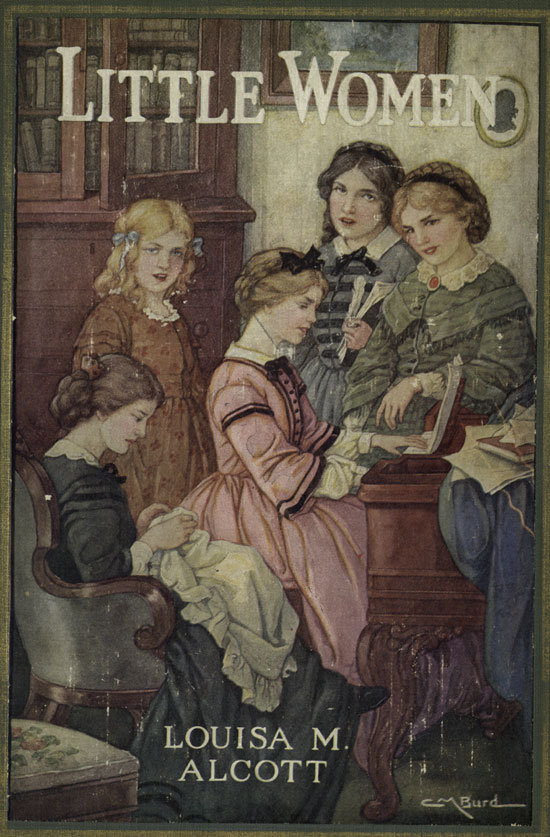
And now, a scene from “Little Women: The Book Club Discussion”...
“I absolutely adored this delightful book! The writing is brilliant, the characters are so endearing, the story is wholly original and completely moving,” cried A—.
“Oh, how you do go on, dear,” replied K—, “but you are right that it is a great book. I do wish, though, that Miss Alcott didn’t feel the need always to use such ornate, overly elaborate expressions.”
“You are right about that!” interjected M—. “While it is an extremely romantic story – and by romantic I mean both a depart from the classical and a darling love story – the whole March family can be a little too perfect, don’t you think?”
“Of course! That’s what makes it so idealistic and quaint!” added C—. “It’s such a nice little piece of diversion.”
“Well, you can call it a ‘little piece,’ but the whole thing was too long for me,” commented L—. “Too long, too flowery, and after a while I just didn’t care anymore! But I do have to agree that the writing part is superb. What about you, I—? What did you think?”
I— replied quietly with a sweet little grin: “I loved it! I give it a 10!”
**********
Little Women
Louisa May Alcott
number of voters: 6
percentage of voters who finished the book: 67%
highest rating: 10 (from our guest Isabel)
lowest rating: 7
average rating: 9
percentage of readers who thought the writing was too flowery: 100
percentage of readers who thought the writing was too flowery but loved it anyway: 83
**********
And now, a scene from “Little Women: The Book Club Discussion”...
“I absolutely adored this delightful book! The writing is brilliant, the characters are so endearing, the story is wholly original and completely moving,” cried A—.
“Oh, how you do go on, dear,” replied K—, “but you are right that it is a great book. I do wish, though, that Miss Alcott didn’t feel the need always to use such ornate, overly elaborate expressions.”
“You are right about that!” interjected M—. “While it is an extremely romantic story – and by romantic I mean both a depart from the classical and a darling love story – the whole March family can be a little too perfect, don’t you think?”
“Of course! That’s what makes it so idealistic and quaint!” added C—. “It’s such a nice little piece of diversion.”
“Well, you can call it a ‘little piece,’ but the whole thing was too long for me,” commented L—. “Too long, too flowery, and after a while I just didn’t care anymore! But I do have to agree that the writing part is superb. What about you, I—? What did you think?”
I— replied quietly with a sweet little grin: “I loved it! I give it a 10!”
A Thousand Splendid Suns
[December 2008]
**********
A Thousand Splendid Suns
Khaled Hosseini
number of voters: 10
percentage of voters who finished the book: 100
highest rating: 10
lowest rating: 5.5
average rating: 8.25 (third highest rating of any book)
degree of difficulty in reading and rating this book without comparing it to The Kite Runner: high
**********
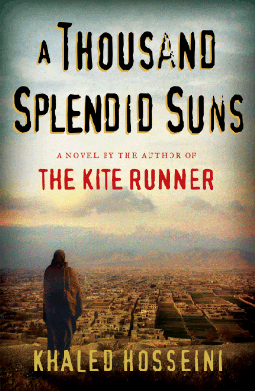
Even as I type this, history is unfolding in Afghanistan. It’s hard to relate to a nation in turmoil when your own is at peace, a culture of oppression when your own is so free. It’s hard to relate to a society so radically different from the one in which you daily live. Headlines are impersonal. News tedious. But a story tells you how it really is.
A Thousand Splendid Suns is a story, a modern history lesson, and an excellent book. By focusing on the fictional lives of two women, Khaled Hosseini is able to tell the story of an entire nation.
Miriam and Laila are two vastly different woman who, due to family circumstances and war, are forced to form an unlikely relationship. The author presents the difficulty of their situation with an even-tempered voice, without resorting to sensationalism or sentimentality. The characters are realistic, tragic but not melodramatic. The writing is beautiful. The story is sometimes difficult to read, but even more difficult to put down.
A Thousand Splendid Suns is a splendid story. But it is also more than a story. It is a magnifying glass on an Afghani culture that to most of us is a great mystery.
**********
A Thousand Splendid Suns
Khaled Hosseini
number of voters: 10
percentage of voters who finished the book: 100
highest rating: 10
lowest rating: 5.5
average rating: 8.25 (third highest rating of any book)
degree of difficulty in reading and rating this book without comparing it to The Kite Runner: high
**********
Even as I type this, history is unfolding in Afghanistan. It’s hard to relate to a nation in turmoil when your own is at peace, a culture of oppression when your own is so free. It’s hard to relate to a society so radically different from the one in which you daily live. Headlines are impersonal. News tedious. But a story tells you how it really is.
A Thousand Splendid Suns is a story, a modern history lesson, and an excellent book. By focusing on the fictional lives of two women, Khaled Hosseini is able to tell the story of an entire nation.
Miriam and Laila are two vastly different woman who, due to family circumstances and war, are forced to form an unlikely relationship. The author presents the difficulty of their situation with an even-tempered voice, without resorting to sensationalism or sentimentality. The characters are realistic, tragic but not melodramatic. The writing is beautiful. The story is sometimes difficult to read, but even more difficult to put down.
A Thousand Splendid Suns is a splendid story. But it is also more than a story. It is a magnifying glass on an Afghani culture that to most of us is a great mystery.
A Name of Her Own
[November 2008]
**********
A Name of Her Own
Jane Kirkpatrick
number of voters: 7
percentage of voters who finished the book: 71
highest rating: 7.5
lowest rating: 4
average rating: 6.214
percentage of readers who described this book as “long” (or some derivative thereof): 86
**********
WANTED:
Strong, intriguing woman of Indian descent for starring role in a work of historical fiction. Must love excruciating long journeys, brutality, near starvation, and little hope of survival. No guarantee of return voyage. Must pay for your own food and supplies.
Possible rewards include: Meeting Sacagawea; near-equal rights with white men (once in a while); and a small place in history.
ALSO WANTED:
Patient, intrigued women for reading of said book. Must love long passages, repetitive plot points, little character development, depressing events, and slim hopes for main character’s survival. No guarantee of uplifting ending. Must invest your own time and money.
Possible rewards include: A glimpse into Anglo-Indian relations circa 1800; a realistic look at the difficulties faced and endurance required to make the trip west in the times before planes, trains, or automobiles; and an inspirational story of one woman’s journey to find her place in the world.
**********
A Name of Her Own
Jane Kirkpatrick
number of voters: 7
percentage of voters who finished the book: 71
highest rating: 7.5
lowest rating: 4
average rating: 6.214
percentage of readers who described this book as “long” (or some derivative thereof): 86
**********
WANTED:
Strong, intriguing woman of Indian descent for starring role in a work of historical fiction. Must love excruciating long journeys, brutality, near starvation, and little hope of survival. No guarantee of return voyage. Must pay for your own food and supplies.
Possible rewards include: Meeting Sacagawea; near-equal rights with white men (once in a while); and a small place in history.
ALSO WANTED:
Patient, intrigued women for reading of said book. Must love long passages, repetitive plot points, little character development, depressing events, and slim hopes for main character’s survival. No guarantee of uplifting ending. Must invest your own time and money.
Possible rewards include: A glimpse into Anglo-Indian relations circa 1800; a realistic look at the difficulties faced and endurance required to make the trip west in the times before planes, trains, or automobiles; and an inspirational story of one woman’s journey to find her place in the world.
A Long Way Gone
[October 2008]
A Long Way Gone, Ishmael Beah
number of voters: 9
percentage of voters who finished the book: 100
highest rating: 8.75
lowest rating: 6.5
average rating: 7.583
percentage of readers who enjoyed reading about the atrocities of war: 0
**********
There are all kinds of stories about war. Many of them are historical recounts. Some are political discourses. Still others are strategic assessments.
A Long Way Gone is none of these.
It is the story of a boy at war. It is the story of a war so recent that it is nearly present-day history. It is the story of Africa.
A Long Way Gone is not a perfect story. It is too long in places. It is repetitive in other places. It ends abruptly, leaving the reader wanting more but also leaving the reader a little disappointed.
But, on the other hand, this is the story of one life in one war, and both life and war are messy, unpredictable things.
A Long Way Gone is an eye-opening true story, eloquent yet simply written. We didn’t all love it, but even those who didn’t could appreciate the importance of its being told.
A Long Way Gone, Ishmael Beahnumber of voters: 9
percentage of voters who finished the book: 100
highest rating: 8.75
lowest rating: 6.5
average rating: 7.583
percentage of readers who enjoyed reading about the atrocities of war: 0
**********
There are all kinds of stories about war. Many of them are historical recounts. Some are political discourses. Still others are strategic assessments.
A Long Way Gone is none of these.
It is the story of a boy at war. It is the story of a war so recent that it is nearly present-day history. It is the story of Africa.
A Long Way Gone is not a perfect story. It is too long in places. It is repetitive in other places. It ends abruptly, leaving the reader wanting more but also leaving the reader a little disappointed.
But, on the other hand, this is the story of one life in one war, and both life and war are messy, unpredictable things.
A Long Way Gone is an eye-opening true story, eloquent yet simply written. We didn’t all love it, but even those who didn’t could appreciate the importance of its being told.
Chocolat
[September 2008]
Chocolat, by Joanne Harris
number of voters: 7
percentage of voters who finished the book: 85
highest rating: 6.75
lowest rating: 5.95
average rating: 6.2
number of urges to consume vast amounts of chocolate while reading this book: innumerable
***
Les truffes, les bon-bons, le chocolat chaud....
Never has a book so enticed our palates as Joanne Harris’s Chocolat. The drinking chocolate, the truffles, the pralines, the candied rose petals. All these and more tempted our taste buds, and our mouths salivated as we eagerly turned the pages.
But there were other, less sweet, morsels as well. That—and the fact that a book, that material thing we hold in our hand, is nothing more than ink and paper—left us wanting more. More than just tantalizing descriptions. More than just vivid details. More than just a story that merely held our curiosity but did not move us.
A somewhat backward morality tale, Chocolat tells of a beautiful and exotic wanderer who opens a chocolaterie at the beginning of Lent in a small French village. What follows is the story of the town’s awakening and one priest’s struggle against it.
It is an interesting story, and we were anxious to discover where it would go. But part of our distaste came from the fact that the story never really went anywhere. Another problem was our lack of affection for the characters; while we would have loved to sip chocolat chaud at this little shop, we were less interested in reading about those who did so. A third problem was in the author’s attempt at creating a sense of timelessness—that this story could be taking place at any time—then confusing us with modern references.
But the chocolate—exquisite, sensual, and inviting—was irresistible. Ultimately, if you love chocolate or baking or France, you might enjoy Chocolat. Just keep a box of truffles near by.
Chocolat, by Joanne Harrisnumber of voters: 7
percentage of voters who finished the book: 85
highest rating: 6.75
lowest rating: 5.95
average rating: 6.2
number of urges to consume vast amounts of chocolate while reading this book: innumerable
***
Les truffes, les bon-bons, le chocolat chaud....
Never has a book so enticed our palates as Joanne Harris’s Chocolat. The drinking chocolate, the truffles, the pralines, the candied rose petals. All these and more tempted our taste buds, and our mouths salivated as we eagerly turned the pages.
But there were other, less sweet, morsels as well. That—and the fact that a book, that material thing we hold in our hand, is nothing more than ink and paper—left us wanting more. More than just tantalizing descriptions. More than just vivid details. More than just a story that merely held our curiosity but did not move us.
A somewhat backward morality tale, Chocolat tells of a beautiful and exotic wanderer who opens a chocolaterie at the beginning of Lent in a small French village. What follows is the story of the town’s awakening and one priest’s struggle against it.
It is an interesting story, and we were anxious to discover where it would go. But part of our distaste came from the fact that the story never really went anywhere. Another problem was our lack of affection for the characters; while we would have loved to sip chocolat chaud at this little shop, we were less interested in reading about those who did so. A third problem was in the author’s attempt at creating a sense of timelessness—that this story could be taking place at any time—then confusing us with modern references.
But the chocolate—exquisite, sensual, and inviting—was irresistible. Ultimately, if you love chocolate or baking or France, you might enjoy Chocolat. Just keep a box of truffles near by.
Snow Flower and the Secret Fan
[August 2008]
**********
Snow Flower and the Secret Fan
Lisa See
number of voters: 7
percentage of voters who finished the book: 100
highest rating: 8.5
lowest rating: 6.5
average rating: 7.87
ideal foot size of the perfect 19th century Chinese foot: 3 inches
estimated average foot size of the First Monday Reading Group: approximately 10 inches
**********
One of the beauties of literature lies in its capacity to transport us—to another time, another place, another life—and expose us to a world we might otherwise never have known, seen, or understood.
Such is the beauty of Snow Flower and the Secret Fan.
Set in nineteenth century China, at what might be considered the height of foot-binding’s reign, the story unfolds as two young girls—Snow Flower and Lily—become laotong, “old sames” (bff, only closer and...well, closer). We follow the lives of these girls as their feet are bound, they are married off to strangers, and as they become mothers. Their paths and their fates intersect in ways that neither of them could have ever expected.
Many aspects of the history and culture are incomprehensible to the modern American reader. Women were treated as property, worthless except for in the production of sons. The bound foot was considered a delicate beauty, and a woman with a small “lotus flower” was deemed to be the best wife prospect. Author Lisa See delves into all this and more in a respectably well-researched fashion.
Snow Flower and the Secret Fan is a solidly written novel that brings the best of historical fiction to a sometimes fickle reader. If only History 101 had been so engaging.
**********
Snow Flower and the Secret Fan
Lisa See
number of voters: 7
percentage of voters who finished the book: 100
highest rating: 8.5
lowest rating: 6.5
average rating: 7.87
ideal foot size of the perfect 19th century Chinese foot: 3 inches
estimated average foot size of the First Monday Reading Group: approximately 10 inches
**********
One of the beauties of literature lies in its capacity to transport us—to another time, another place, another life—and expose us to a world we might otherwise never have known, seen, or understood.
Such is the beauty of Snow Flower and the Secret Fan.
Set in nineteenth century China, at what might be considered the height of foot-binding’s reign, the story unfolds as two young girls—Snow Flower and Lily—become laotong, “old sames” (bff, only closer and...well, closer). We follow the lives of these girls as their feet are bound, they are married off to strangers, and as they become mothers. Their paths and their fates intersect in ways that neither of them could have ever expected.
Many aspects of the history and culture are incomprehensible to the modern American reader. Women were treated as property, worthless except for in the production of sons. The bound foot was considered a delicate beauty, and a woman with a small “lotus flower” was deemed to be the best wife prospect. Author Lisa See delves into all this and more in a respectably well-researched fashion.
Snow Flower and the Secret Fan is a solidly written novel that brings the best of historical fiction to a sometimes fickle reader. If only History 101 had been so engaging.
The Memory Keeper's Daughter
[July 2008]
**********
The Memory Keeper’s Daughter
Kim Edwards
number of voters: 5
percentage of voters who finished the book: 80
highest rating: 8.5
lowest rating: 3
average rating: 5.6
number of books, including this one, for which Angie has written a recap without having read the book: 1
**********
No one knows for sure who recommended The Memory Keeper’s Daughter. If only we knew, then we would have someone either to thank or to blame.
Some enjoyed the writing style, others despised it. Some felt no attachment to the characters, others connected with them. Some thought it was an easy read, others just couldn’t get into it.
The one point on which we could almost agree was that the storyline was interesting—albeit depressing.
The story centers on an over-achieving doctor and his wife and their set of twins. The son arrives first, a healthy strapping boy. The daughter comes next, but is seen by her father as imperfect because of her Downs syndrome. He secretly sends the daughter to an institution and tells his wife she arrived stillborn. From here the story unwinds in a slow burn, as lies and deception tear the once-happy couple apart and a new life comes to an unexpected mother.
As a group, we enjoyed discussing the realism of the book’s plot as well as its relationship to other books we’ve read recently.
Maybe the best summary of our opinion on this book is this: When I asked if I should take the time to read it, no one really said yes.
**********
The Memory Keeper’s Daughter
Kim Edwards
number of voters: 5
percentage of voters who finished the book: 80
highest rating: 8.5
lowest rating: 3
average rating: 5.6
number of books, including this one, for which Angie has written a recap without having read the book: 1
**********
No one knows for sure who recommended The Memory Keeper’s Daughter. If only we knew, then we would have someone either to thank or to blame.
Some enjoyed the writing style, others despised it. Some felt no attachment to the characters, others connected with them. Some thought it was an easy read, others just couldn’t get into it.
The one point on which we could almost agree was that the storyline was interesting—albeit depressing.
The story centers on an over-achieving doctor and his wife and their set of twins. The son arrives first, a healthy strapping boy. The daughter comes next, but is seen by her father as imperfect because of her Downs syndrome. He secretly sends the daughter to an institution and tells his wife she arrived stillborn. From here the story unwinds in a slow burn, as lies and deception tear the once-happy couple apart and a new life comes to an unexpected mother.
As a group, we enjoyed discussing the realism of the book’s plot as well as its relationship to other books we’ve read recently.
Maybe the best summary of our opinion on this book is this: When I asked if I should take the time to read it, no one really said yes.
The Curious Incident of the Dog in the Night-time
[June 2008]
**********
The Curious Incident of the Dog in the Night-time
Mark Haddon
number of voters: 5
percentage of voters who finished the book: 100
highest rating: 9
lowest rating: 8.5
average rating: 8.8—our highest rated book so far
percentage of readers who understood all of the math concepts presented in this book: 0
**********
Take one novel (N), divide it by one part mystery (m) plus one part humor (h), add any autism spectrum disorder (A), multiply it all by some fantastic writing (lit), and you’ve got one great book.
({N / (m + h)} + A) x lit = awesome
You don’t need to understand one part of this (or any other) math equation to appreciate—and even love—The Curious Incident of the Dog in the Night-time. This is a fascinating, entertaining, funny, sad, well-written, easy-to-read, and possibly downright brilliant book, and it’s all told from the perspective of a fifteen-year-old boy who has Asperger’s syndrome and loves “maths.” He discovers that his neighbor’s dog has been murdered, setting into play a chain of impossible-to-foresee events.
What more do you need to know to convince you to read this book? Simply refer back to the above equation and solve for awesome.
**********
The Curious Incident of the Dog in the Night-time
Mark Haddon
number of voters: 5
percentage of voters who finished the book: 100
highest rating: 9
lowest rating: 8.5
average rating: 8.8—our highest rated book so far
percentage of readers who understood all of the math concepts presented in this book: 0
**********
Take one novel (N), divide it by one part mystery (m) plus one part humor (h), add any autism spectrum disorder (A), multiply it all by some fantastic writing (lit), and you’ve got one great book.
({N / (m + h)} + A) x lit = awesome
You don’t need to understand one part of this (or any other) math equation to appreciate—and even love—The Curious Incident of the Dog in the Night-time. This is a fascinating, entertaining, funny, sad, well-written, easy-to-read, and possibly downright brilliant book, and it’s all told from the perspective of a fifteen-year-old boy who has Asperger’s syndrome and loves “maths.” He discovers that his neighbor’s dog has been murdered, setting into play a chain of impossible-to-foresee events.
What more do you need to know to convince you to read this book? Simply refer back to the above equation and solve for awesome.
Eli
[May 2008]
**********
Eli
Bill Myer
number of voters: 4
percentage of voters who finished the book: 100
highest rating: 7
lowest rating: 6
average rating: 6.375
percentage of readers who hope they are sheep (as opposed to goats): 100
**********
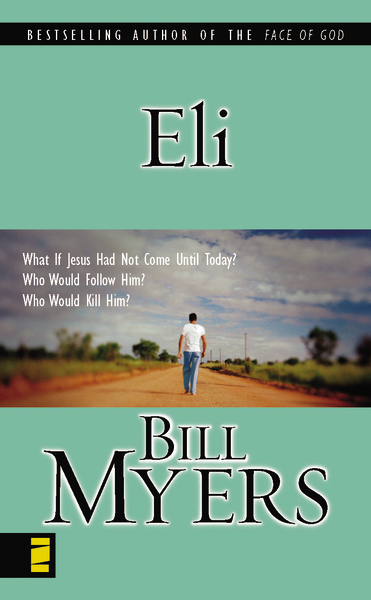
The Parable of the Somewhat Dissatisfied Reader
There once was a woman who read a book. It was an ordinary book with an extraordinary concept: What if Christ hadn’t come to Israel 2000 years ago but to America, today? The woman was intrigued.
She read the book quickly; it was a fairly easy read. She thought it was somewhat interesting and that it provided a few thought-provoking moments. But this book didn’t move her the way she expected it might. For such a fascinating concept, the book left her rather uninspired. Perhaps it was the writing (a bit lackluster), or maybe the characters (sort of one-note), or the parallel universe plot (a tad sci-fi).
On the other hand, the book had held her interest. There are many many (and might we add MANY) worse books out there. And it made her wonder... How would she respond if Christ were to appear today?
As the woman finished the book, she pondered her options: pan it? praise it? pass it on?
Well, dear disciples of literature, what would you do?
**********
Eli
Bill Myer
number of voters: 4
percentage of voters who finished the book: 100
highest rating: 7
lowest rating: 6
average rating: 6.375
percentage of readers who hope they are sheep (as opposed to goats): 100
**********
The Parable of the Somewhat Dissatisfied Reader
There once was a woman who read a book. It was an ordinary book with an extraordinary concept: What if Christ hadn’t come to Israel 2000 years ago but to America, today? The woman was intrigued.
She read the book quickly; it was a fairly easy read. She thought it was somewhat interesting and that it provided a few thought-provoking moments. But this book didn’t move her the way she expected it might. For such a fascinating concept, the book left her rather uninspired. Perhaps it was the writing (a bit lackluster), or maybe the characters (sort of one-note), or the parallel universe plot (a tad sci-fi).
On the other hand, the book had held her interest. There are many many (and might we add MANY) worse books out there. And it made her wonder... How would she respond if Christ were to appear today?
As the woman finished the book, she pondered her options: pan it? praise it? pass it on?
Well, dear disciples of literature, what would you do?
I Know This Much Is True
[April 2008]
**********
I Know This Much Is True
Wally Lamb
number of voters: 4
percentage of voters who finished the book: 75
highest rating: 8.5
lowest rating: 5
average rating: 6.625
percentage of readers who wish their life was as cheery as Dominick Birdsey’s: 0
**********
If our lives were as rotten as Dominick Birdsey’s, maybe we’d be grumpy, pessimistic cranks too. And maybe we’d swear just as much.
And maybe Wally Lamb intended I Know This Much to Be True to be a long, foreboding journey.
But that doesn’t mean that we have read it. Or like it.
We were interested in the story; it was mysterious, intricate, believable (mostly). The dynamic between the brothers was riveting. The familial history was fascinating.
But just once, maybe, we would have liked Dominick to take a “glass half full” approach to life. Just once we would have liked the author to have offered a glimmer of hope.
The few who read to the last page were rewarded with an unexpected shining moment. But it was a long time coming.
**********
I Know This Much Is True
Wally Lamb
number of voters: 4
percentage of voters who finished the book: 75
highest rating: 8.5
lowest rating: 5
average rating: 6.625
percentage of readers who wish their life was as cheery as Dominick Birdsey’s: 0
**********
If our lives were as rotten as Dominick Birdsey’s, maybe we’d be grumpy, pessimistic cranks too. And maybe we’d swear just as much.
And maybe Wally Lamb intended I Know This Much to Be True to be a long, foreboding journey.
But that doesn’t mean that we have read it. Or like it.
We were interested in the story; it was mysterious, intricate, believable (mostly). The dynamic between the brothers was riveting. The familial history was fascinating.
But just once, maybe, we would have liked Dominick to take a “glass half full” approach to life. Just once we would have liked the author to have offered a glimmer of hope.
The few who read to the last page were rewarded with an unexpected shining moment. But it was a long time coming.
The Time Traveler’s Wife
[March 2008]
**********
The Time Traveler’s Wife
Audrey Niffenegger
number of voters: 5
percentage of voters who finished the book: 100
highest rating: 7
lowest rating: 6
average rating: 6.45
number of readers who, in the middle of book group, time traveled to their high school reunion and visited with their high school selves: 1
**********
Monday night.
7:08 pm.
Everyone is glad for a chance to discuss this book. It is nothing if not memorable.
7:18 pm.
We don’t really like the book. It’s hard to follow. The characters are unlikable. There are quite a few raw, ugly sex scenes.
7:42 pm.
The ending confuses us, disappoints us, intrigues us, surprises us, pleases us—sometimes all of these together. There is much discussion about what actually takes place.
7:23 pm.
We think the time traveler himself is a little creepy. We try to like him, but we don’t always succeed. He both pitiable and despicable. His wife is sometimes pathetic. We like her mostly, but not always. They do not leave us ambivalent.
7:30 pm.
We heartily agree that Gomez is the worst character in the book, on many levels.
7:51
We wouldn’t recommend The Time Traveler’s Wife to just anyone, but we would recommend it, with caution, to some. It is a book that hits you like an exposed nerve, shocking and sometimes uncomfortable, but it is an experience you will always remember.
7:36 pm.
We do kind of like this book. It scores major points for originality. It’s incredibly romantic and dreamy. We are amazed that this is the author’s first novel.
7:00 pm.
Christina, Megan, and Stephanie arrive at Angie’s house, each with a copy of this month’s book, The Time Traveler’s Wife by Audrey Niffenegger.
**********
The Time Traveler’s Wife
Audrey Niffenegger
number of voters: 5
percentage of voters who finished the book: 100
highest rating: 7
lowest rating: 6
average rating: 6.45
number of readers who, in the middle of book group, time traveled to their high school reunion and visited with their high school selves: 1
**********
Monday night.
7:08 pm.
Everyone is glad for a chance to discuss this book. It is nothing if not memorable.
7:18 pm.
We don’t really like the book. It’s hard to follow. The characters are unlikable. There are quite a few raw, ugly sex scenes.
7:42 pm.
The ending confuses us, disappoints us, intrigues us, surprises us, pleases us—sometimes all of these together. There is much discussion about what actually takes place.
7:23 pm.
We think the time traveler himself is a little creepy. We try to like him, but we don’t always succeed. He both pitiable and despicable. His wife is sometimes pathetic. We like her mostly, but not always. They do not leave us ambivalent.
7:30 pm.
We heartily agree that Gomez is the worst character in the book, on many levels.
7:51
We wouldn’t recommend The Time Traveler’s Wife to just anyone, but we would recommend it, with caution, to some. It is a book that hits you like an exposed nerve, shocking and sometimes uncomfortable, but it is an experience you will always remember.
7:36 pm.
We do kind of like this book. It scores major points for originality. It’s incredibly romantic and dreamy. We are amazed that this is the author’s first novel.
7:00 pm.
Christina, Megan, and Stephanie arrive at Angie’s house, each with a copy of this month’s book, The Time Traveler’s Wife by Audrey Niffenegger.
Rocket Boys
[February 2008]
**********
Rocket Boys
Homer H. Hickam
number of voters: 4
percentage of voters who finished the book: 25
highest rating: 8
lowest rating: 7
average rating: 7.4375
percentage of readers who, upon reading this book, became nostalgic about a time before they were born: 100
**********
There is a place you have never been, never will go. This place doesn’t exist anymore, hasn’t existed since, perhaps, before you were born. Some of the people who lived there, then, have died; eventually, the rest of them will too. But this place, though gone, will not be forgotten.
Herein lies the wonder of a book: a time and place immortalized by the written word before it is lost forever in the memories of those who were there but are now gone themselves.
And so, we enjoyed Rocket Boys for its glimpse into history: Coalwood, West Virginia, circa 1950, a small mining town seemingly far-removed from the space race between the U.S. and the Russians, the story of one boy, Sonny Hickam, born a coal miner’s son, who raised himself on rockets and grew up to be an aerospace engineer.
Books like Rocket Boys are the reason we read. They provide windows through which we can peer into the lives and times we might otherwise never have known.
**********
Rocket Boys
Homer H. Hickam
number of voters: 4
percentage of voters who finished the book: 25
highest rating: 8
lowest rating: 7
average rating: 7.4375
percentage of readers who, upon reading this book, became nostalgic about a time before they were born: 100
**********
There is a place you have never been, never will go. This place doesn’t exist anymore, hasn’t existed since, perhaps, before you were born. Some of the people who lived there, then, have died; eventually, the rest of them will too. But this place, though gone, will not be forgotten.
Herein lies the wonder of a book: a time and place immortalized by the written word before it is lost forever in the memories of those who were there but are now gone themselves.
And so, we enjoyed Rocket Boys for its glimpse into history: Coalwood, West Virginia, circa 1950, a small mining town seemingly far-removed from the space race between the U.S. and the Russians, the story of one boy, Sonny Hickam, born a coal miner’s son, who raised himself on rockets and grew up to be an aerospace engineer.
Books like Rocket Boys are the reason we read. They provide windows through which we can peer into the lives and times we might otherwise never have known.
Anne of Green Gables
[January 2008]
**********
Anne of Green Gables
L.M. Montgomery
number of voters: 5
percentage of voters who finished the book: 100
highest rating: 9.5
lowest rating: 7.5
average rating: 8.25
percentage of readers who used the word “delightful” in their description of this book: 40
**********
It would be most efficient to simply say that we at the First Monday Reading Group loved this book. But then, where is the poetry in that? For in describing a thing we can merely list its attributes or we can describe the beauty and emotion that the thing inspires.
And so, we could say that Anne of Green Gables is a nice story about an orphan girl who finds a home. It is well-written and will appeal to those at any age in any part of the world. We could say that it is timeless and universal, or that it is a fine piece of literature.
Any of this would do.
And yet, to capture the essence of this book, we should be more inclined to say that it is a divine tale, charming, a breath of fresh literary air. The characters are simple yet well-drawn, simultaneously ideal and flawed. The author’s descriptions are like bursts of color on a gray pallet, shimmering reflections of a day long gone, brimming with purity and romance.
Yes, this is what we should say. After all, if it is efficiency for which you long, Anne of Green Gables may not be the book for you.
**********
Anne of Green Gables
L.M. Montgomery
number of voters: 5
percentage of voters who finished the book: 100
highest rating: 9.5
lowest rating: 7.5
average rating: 8.25
percentage of readers who used the word “delightful” in their description of this book: 40
**********
It would be most efficient to simply say that we at the First Monday Reading Group loved this book. But then, where is the poetry in that? For in describing a thing we can merely list its attributes or we can describe the beauty and emotion that the thing inspires.
And so, we could say that Anne of Green Gables is a nice story about an orphan girl who finds a home. It is well-written and will appeal to those at any age in any part of the world. We could say that it is timeless and universal, or that it is a fine piece of literature.
Any of this would do.
And yet, to capture the essence of this book, we should be more inclined to say that it is a divine tale, charming, a breath of fresh literary air. The characters are simple yet well-drawn, simultaneously ideal and flawed. The author’s descriptions are like bursts of color on a gray pallet, shimmering reflections of a day long gone, brimming with purity and romance.
Yes, this is what we should say. After all, if it is efficiency for which you long, Anne of Green Gables may not be the book for you.
Subscribe to:
Posts (Atom)